
OPINION:: Ambubachi Observance at Kamakhya: A Civilizational Dialogue on Womanhood, Purity, and Sacred Silence
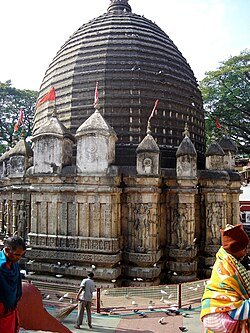
The ancient Ambubachi Mela, celebrated at the Kamakhya Shakti Peetha in Assam, has once again drawn lakhs of pilgrims, seekers, ascetics, and scholars. But beyond its religious fervor, the Ambubachi festival has come to symbolize something far more profound—a spiritual recognition of the female body, menstruation, and the sacred cycles of nature that modern societies continue to stigmatize.
Mythological and Scriptural Interpretation:
According to the Kalika Purana, Yogini Tantra, and Kamakhya Tantra, the Ambubachi period marks the annual menstruation of Goddess Kamakhya, who represents the Yoni (womb or generative force) of Shakti. The sanctum of Kamakhya does not house a conventional idol but instead worships a rock cleft shaped like a vulva, moistened by a natural spring. Which symbolizing the divine menstruation and in this period the temple doors remain closed. On the fourth day, “Nirmala Darshan” (pure viewing) resumes. This signifies not pollution but sacred pause—an act of divine rest, granting dignity to the feminine biological cycle.
Scientific and Psychological Resonance:
A 2022 World Health Organization report states that over 48% of adolescent girls in South Asia still lack proper menstrual education. This ignorance often translates into shame, trauma, and lowered self-worth. In contrast, Ambubachi is a cultural exception. Dr. Sharada Mitra, a medical anthropologist, says: “This is a rare cultural moment where menstruation is sanctified. It teaches society that periods are not taboo—they are rhythm, they are life.”
Tantric Philosophy: From Lust to Liberation
While thousands gather outside, deep inside the forests and caves of Nilachal Hill, tantric practitioners—Aghoris, Kapalikas, and Vamacharis—conduct intense rituals. For them, these three nights represent a sacred window of transcendence, where Maya (illusion) dissolves, and Shakti reveals herself in stillness.
Swami Achyutananda, a respected tantric scholar, explains:
“There is no lust here—only the conquest of lust. Ambubachi is not sensuality—it is sanctity.”
A Feminist Lens on a Religious Festival: Feminist scholars argue that Ambubachi could serve as the basis for a nationwide campaign on menstrual dignity and reproductive health. Kavita Basu, rights activist, comments: “In a society where periods are whispered about in shame, this is the one tradition where menstruation is sacred. That is revolutionary.”
Several NGOs in Assam and Meghalaya have already launched Ambubachi-inspired health awareness drives in remote tribal villages, distributing free sanitary napkins and organizing educational workshops.
State, Religion, and the Future of Social Messaging: The Assam government has positioned Ambubachi as a key spiritual tourism event, but the larger narrative shows that religion and social progress need not be adversarial. This festival—rooted in tantra, myth, and lived tradition—teaches that temples can be centers of social awareness as much as devotion.
Conclusion: Ambubachi is not just a festival. It is a spiritual revolution. It is a pause that speaks louder than chants, a silence that acknowledges the power of creation, and a culture that says
Writer: Mrinmoy Banerjee is the Editor-In-Chief of The Views Express
(Note: The OPINION section of The Views Express presents the articles or columns by individuals, where the writer exclusively writes on the matters of History, International Relations, Politics, Economy, Literature etc. on the basis of his or her opinion, knowledge, research & observations on the subject matter)
The Views Express is a news website, we truely believe in presenting & analysing the news that really matters to the people in general.
: +91 9836903612
: theviewsexpress@gmail.com
info@theviewsexpress.in
Mrinmoy Banerjee - Editor In Chief
Moumita Tarafdar - Managing Editor
Supriyo Mukherjee - Associate Editor
Anindya Das - Associate Editor (Honorary)
Copyright © 2024 The Views Express, All Rights Reserved. Developed by PRIGROW


.jpg)