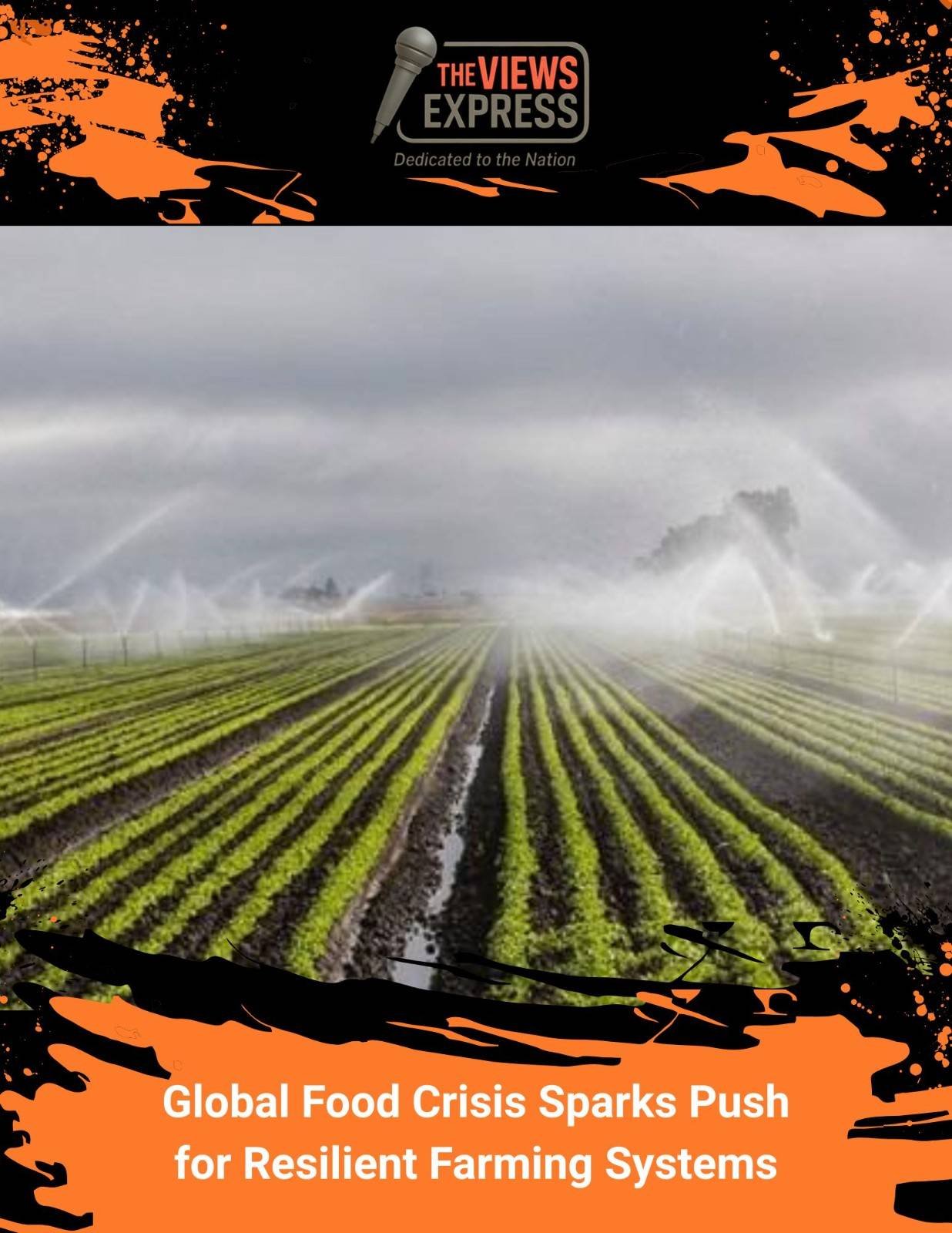
Global Food Crisis Sparks Push for Resilient Farming Systems
Recent geopolitical tensions in the Middle East and disruptions around the Strait of Hormuz have once again exposed the vulnerability of global food systems. For countries across Asia, especially in South Asia, the impact has been immediate and severe. Rising fuel prices, fertilizer shortages, and supply chain disruptions are threatening agricultural production and the livelihoods of millions of farmers.
The Strait of Hormuz plays a crucial role in global trade, particularly in the transport of fuel and agricultural inputs such as fertilizers and natural gas. Countries like India, Bangladesh, and Nepal heavily depend on these imports, making their agricultural sectors highly vulnerable during international crises. When supply chains are disrupted, farming costs increase, planting seasons are delayed, and farmer incomes decline sharply.
Experts warn that these disruptions are not temporary. Even if trade routes reopen, continued geopolitical instability and damage to energy infrastructure may keep prices volatile for months. Smallholder farmers face the greatest challenge, struggling with rising production costs while also dealing with difficulties in transporting and selling their crops.
In response, agricultural experts are increasingly promoting regenerative agriculture and renewable energy as long-term solutions. Regenerative farming focuses on improving soil health, reducing dependence on chemical fertilizers, conserving water, and increasing biodiversity. Practices such as crop diversification, compost use, reduced tillage, and natural pest management help farmers become less dependent on expensive external inputs.
Renewable energy, especially solar-powered irrigation, is also proving highly effective. Studies from Bangladesh show that solar irrigation systems can reduce farming costs by up to 50 percent while improving productivity and profitability.
Across South Asia, many farmers are already adopting climate-smart and regenerative practices through cooperative programs and local initiatives. These systems not only improve resilience during crises but also increase long-term profitability and food security.
Experts believe that governments, businesses, and financial institutions must now work together to support sustainable agriculture. As global shocks become more frequent, rebuilding fragile food systems is no longer enough. The focus must shift toward creating resilient, self-sustaining agricultural systems capable of withstanding future disruptions.
The Views Express is a news website, we truely believe in presenting & analysing the news that really matters to the people in general.
: +91 9836903612
: theviewsexpress@gmail.com
info@theviewsexpress.in
Mrinmoy Banerjee - Editor In Chief
Moumita Tarafdar - Managing Editor
Supriyo Mukherjee - Associate Editor
Anindya Das - Associate Editor (Honorary)
Copyright © 2024 The Views Express, All Rights Reserved. Developed by PRIGROW